Tenebrae Lux Phone Code
The bunker phone takes a 6-digit number that is different in every game. Visit the room on all six calendar dates, note the one thing that is off on each, turn each into a digit, dial them in date order and press #.
How the room works
After the three boards, the bunker door opens onto a room with a radio console, crates, a desk and a wall phone. A memo on the desk spells out the task: note every anomaly, anomalies hold the key, everything must be in order, dial the complete number followed by #.
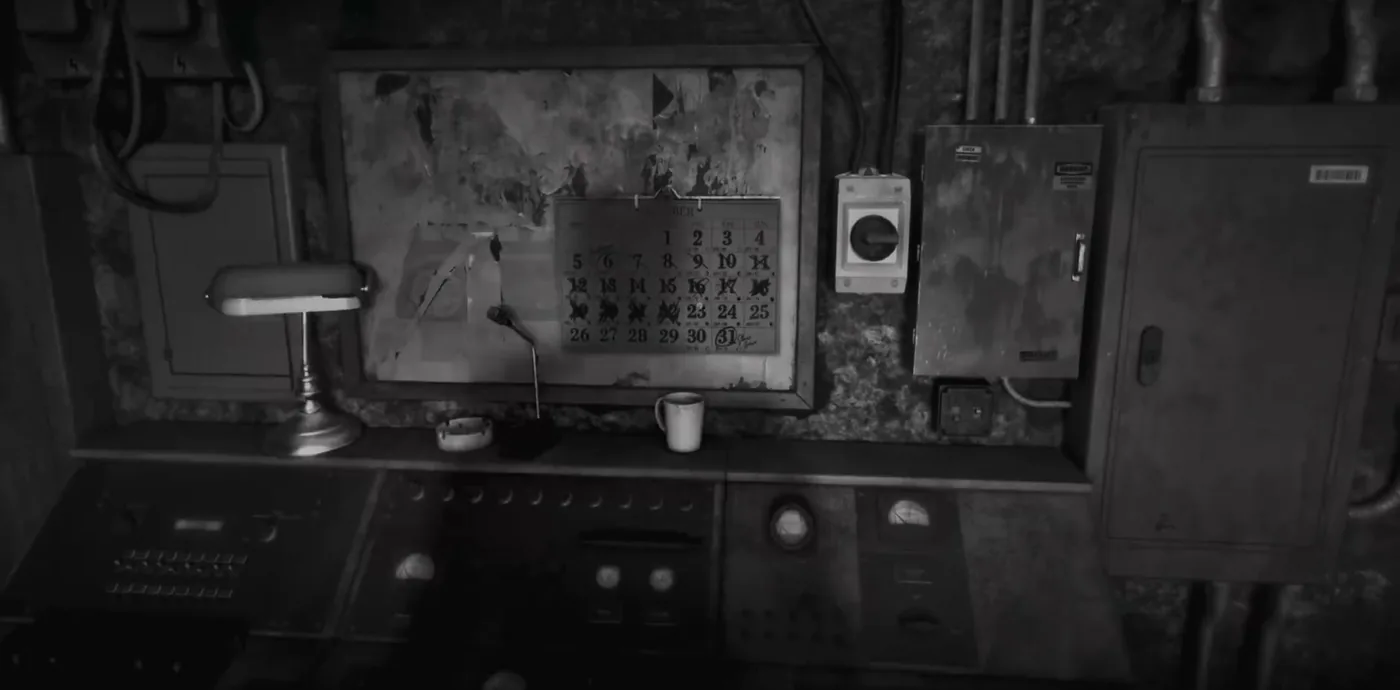
Walk through the door beside the phone and up the stairs and you are back in the same room, on another date. The calendar to the left of the phone shows which: October 11, 14, 20, 23, 27 or 30. The dates come in a random order.
Each date has exactly one anomaly. Ten kinds exist; your game uses six. If your room has no clock, no painting or a tape player you can't use, that object simply isn't part of your game.
What to check on every visit
In the order you meet them walking in. Note the value every time, normal or not: an anomaly only stands out against the other five dates.
| Object | Where | How it becomes a digit | Example |
|---|---|---|---|
| Engine notice | “Developed using Zuchworks Engine” appears as you enter, ending in a Greek letter | The letter's number (table below) | γ = 3 |
| Phone rings | The wall phone rings as you enter | The number of rings on the odd date | 2 rings instead of 3 = 2 |
| Music | The shanty playing in the room sounds slowed and warped | Slow means 33 rpm (the other record is 45 rpm): 3 + 3 | 6 |
| Painting | On the shelf to the right; its columns form a Roman numeral | The numeral; add the digits if it is 10 or more | XIII = 13 → 4 |
| Tape player | On the desk; the man reads out a date | The digit that changed; if two changed, add them | Oct 11 → Oct 19, 1926 = 9; Oct 11 → Oct 20 = 2 + 0 = 2 |
| Protocol number | Header of the Cascade File on the desk, usually redacted | Add the digits | 42 → 6 |
| Framed photo | On the desk; on the odd date it has fallen over | Count everyone in it, background and scratched-out faces included | 4 people = 4 |
| Record price | The Bateson Brothers record on the barrels to the left | Add the digits until one is left | 85¢ → 13 → 4; 50¢ → 5 |
| Lamp | Desk lamp left of the calendar flashes | Long flash = dash, short flash = dot; read the Morse digit | – – · · · = 7 |
| Clock | Above the console; shows a different time | Angle between the hands, digits added | 7:00 = 150° → 6 |
Greek letters
The game counts in Greek numerals, so the sixth letter is the old digamma and zeta is 7.
| Letter | Name | Digit |
|---|---|---|
| α | alpha | 1 |
| β | beta | 2 |
| γ | gamma | 3 |
| δ | delta | 4 |
| ε | epsilon | 5 |
| ϝ | digamma | 6 |
| ζ | zeta | 7 |
| η | eta | 8 |
| θ | theta | 9 |
Morse digits
The game's own chart is pinned down and to the right of the calendar. Every digit is five flashes.
| Digit | Flashes |
|---|---|
| 0 | – – – – – |
| 1 | · – – – – |
| 2 | · · – – – |
| 3 | · · · – – |
| 4 | · · · · – |
| 5 | · · · · · |
| 6 | – · · · · |
| 7 | – – · · · |
| 8 | – – – · · |
| 9 | – – – – · |
Clock angles
Use the smaller angle between the hands. A book in the room hints at it: “the angle of the hour, from hour to minute”.
| Time | Angle | Digit |
|---|---|---|
| 1:00 | 30° | 3 |
| 2:00 | 60° | 6 |
| 3:00 | 90° | 9 |
| 4:00 | 120° | 3 |
| 5:00 | 150° | 6 |
| 6:00 | 180° | 9 |
| 7:00 | 150° | 6 |
| 8:00 | 120° | 3 |
| 9:00 | 90° | 9 |
| 10:00 | 60° | 6 |
| 11:00 | 30° | 3 |
| 12:00 | 0° | 0 |
Mistakes that cost players hours
- γ is gamma, not a Y. Aftermath's reviewer lost most of an hour reading the engine's γ as upsilon. Lower-case gamma looks like a y with a loop; it is 3.
- Count every face in the photo. One man's face is scratched out. He still counts.
- Lamp: time the lit flashes, not the dark gaps. Film the lamp on your phone and play it back slowly if you can't tell long from short.
- The whispering man is not a clue. The voice behind the locked door downstairs says things like “you can't leave the circle if you are in the circle”. None of it feeds the code.
- Look up the date every visit. The order of dates is random. Writing an anomaly under the wrong date scrambles the code even when every digit is right.
- Wrong numbers cost nothing. Dialling a wrong code doesn't reset the room, so you can try variations.
Five real codes, date by date
Other players' games. They show the method; your dates will hold different anomalies.
| Date | GameRant | GameSpot | Aftermath | r/GTA (B) | r/GTA (C) |
|---|---|---|---|---|---|
| Oct 11 | Photo, 4 people → 4 | Tape says Oct 20 → 2 | Record 50¢ → 5 | Photo, 4 people → 4 | Not spotted, tried 0–9 → 3 |
| Oct 14 | Tape 1926 → 1921 → 1 | Clock 7:00 → 6 | Engine γ → 3 | Tape says Oct 20 → 2 | Photo, extra person → 4 |
| Oct 20 | Protocol 42 → 6 | Protocol 42 → 6 | 3 rings instead of 4 → 3 | Painting XIII → 4 | 1 ring → 1 |
| Oct 23 | Music slow → 6 | 2 rings instead of 3 → 2 | Protocol 42 → 6 | 3 rings → 3 | Clock 8:00 → 3 |
| Oct 27 | Painting XIII → 4 | Music slow → 6 | Photo, 4 people → 4 | Record 85¢ → 4 | Lamp – – · · · → 7 |
| Oct 30 | Engine γ → 3 | Engine γ → 3 | Lamp → 9 | Engine ε → 5 | Protocol 42 → 6 |
| Code | 416643# | 266263# | 533649# | 424345# | 341376# |
When one date shows nothing
Go back to that date and compare object by object with your notes from the other five. Sounds are the easiest to miss: the number of rings and the speed of the music. If it still looks normal, the other five digits leave only ten possible codes. Dial them in order; the solver lists them for you.
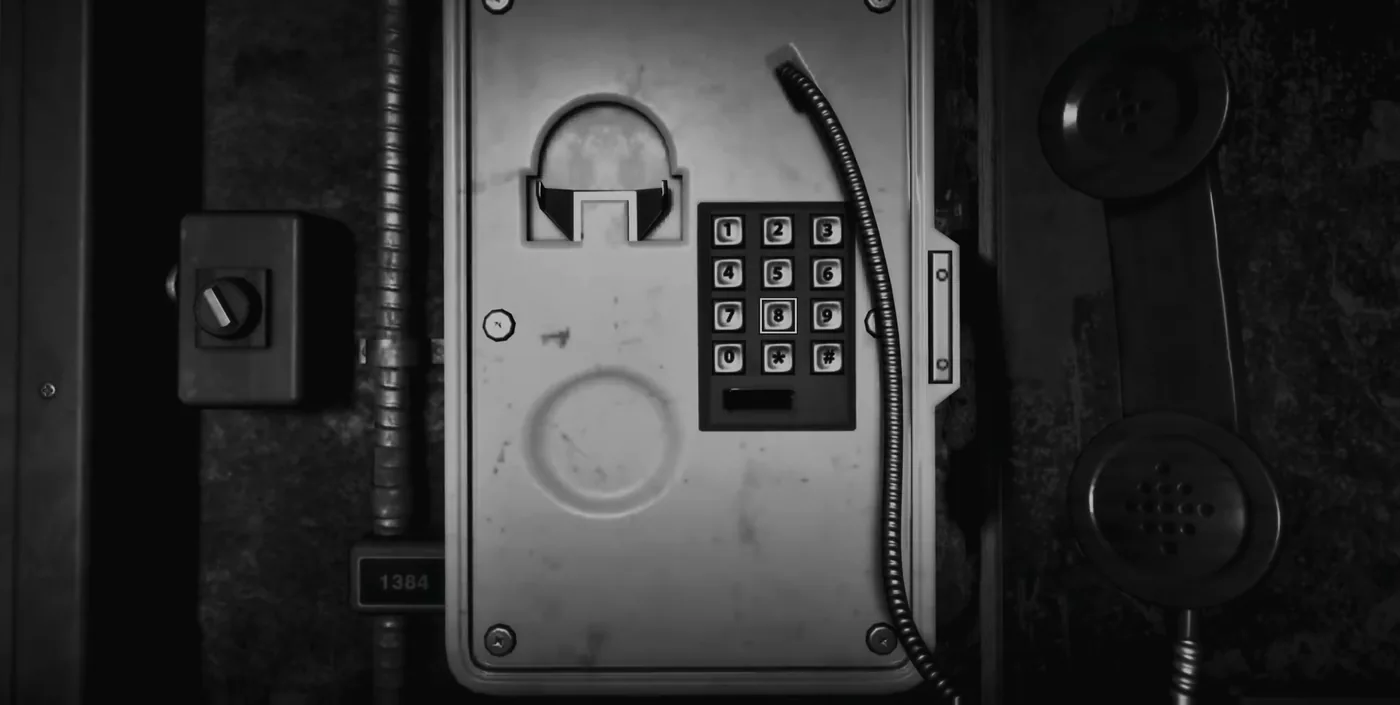
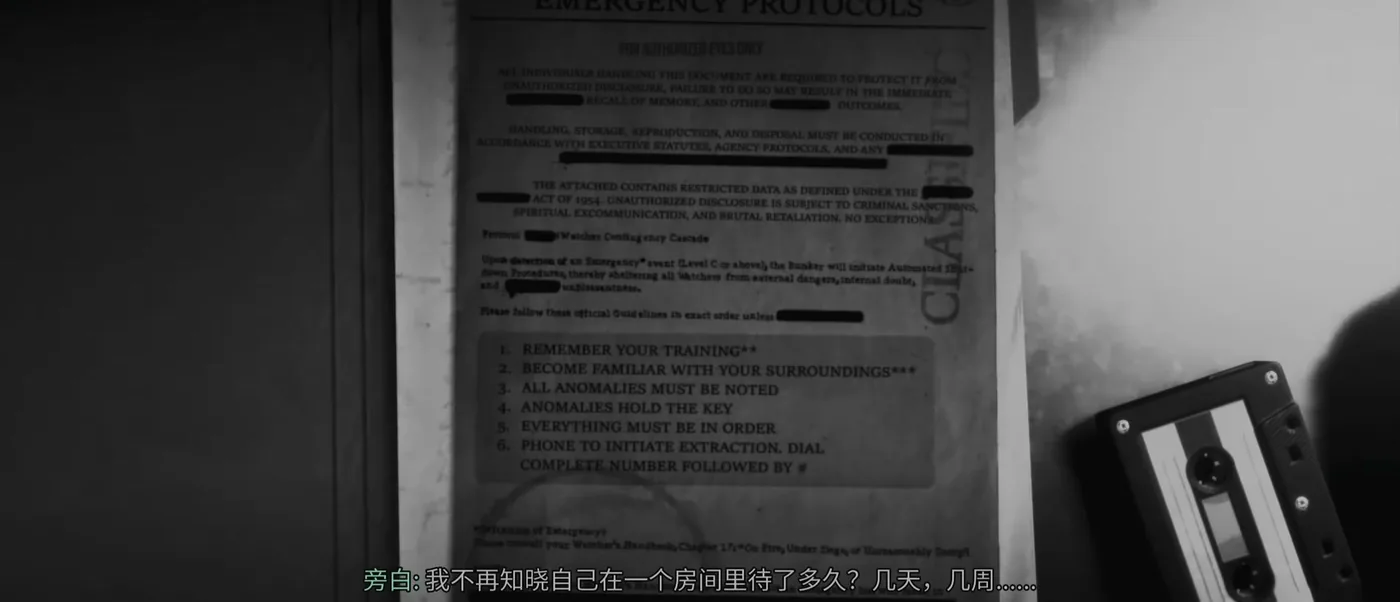
After the call, two pages turn up in the bunker: the room beside the record barrels opens, and when you come out the shelves in the main room have fallen to reveal another. Both count towards the secret ending. Next stop: the ruins and bridge.